Follow a credit sale beyond the first payment.
A posted sale and a customer collection are different events. Record what was sold when the bill is posted, then record later payments when money is received. The bill and customer ledger help you follow what remains due.
What happens when only part of a bill is paid?
The bill records the sale, the paid amount, and the remaining balance. Stock reduces when the bill is posted, even if money remains to collect. Later customer payments reduce the balance according to the linked bill and account records; they are not a second sale.
Step by step
- 01
Choose the saved customer
Select the right customer in Billing so the transaction belongs to an account you can follow. Review the products, quantity, price and transaction date before posting.
- 02
Record the amount actually paid
Enter the payment collected now and its actual method. Post the bill when the transaction is ready. Do not enter the full bill value as paid when only a deposit or part payment was received.
- 03
Record each later collection
Use Payments, select Customer and the saved contact, then link the relevant bill where appropriate. Enter the amount, date and method. Check the remaining balance rather than creating another bill for the collection.
- 04
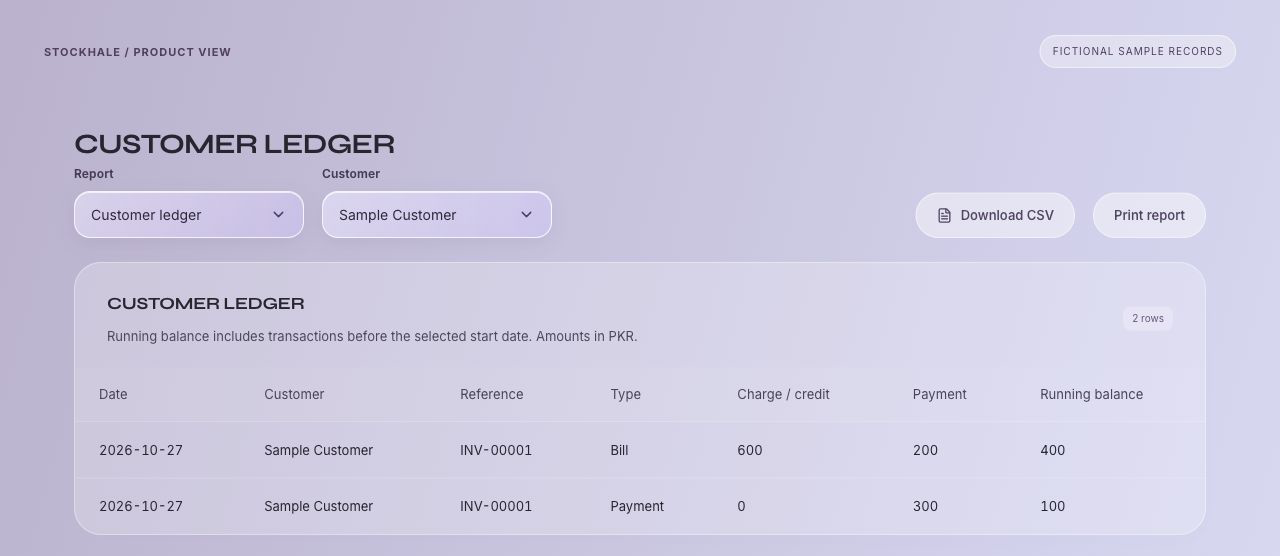
Review the customer ledger
Open Customers and review the contact details and ledger. Check invoices, payments, returns, and any unapplied credit. A whole-account balance can differ from an individual bill balance when other transactions or credits exist.
A 600 bill paid in stages
Illustrative sample: 4 mugs at PKR 150 each; no tax, discounts, returns, opening balances or other account activity.
| Event | Payment | Bill still due |
|---|---|---|
| Bill posted | 200 | 400 |
| Later collection | 300 | 100 |
| Final collection | 100 | 0 |
See the product workflow
Check the details that matter.
- Use one bill for the sale and payment records for later collections.
- Use the correct customer and bill reference.
- Keep the payment method consistent with the money actually received.
- Review returns and unapplied credit before collecting an apparent outstanding amount.
A few useful distinctions.
Does paying a bill reduce stock again?
No. The posted sale has already affected stock. A later payment records settlement of the amount owed.
Why might the customer account and one bill show different amounts?
The account covers all of that customer’s activity, including other bills and credits. One bill covers a specific transaction. Review the ledger and unapplied-credit details to understand the difference.